

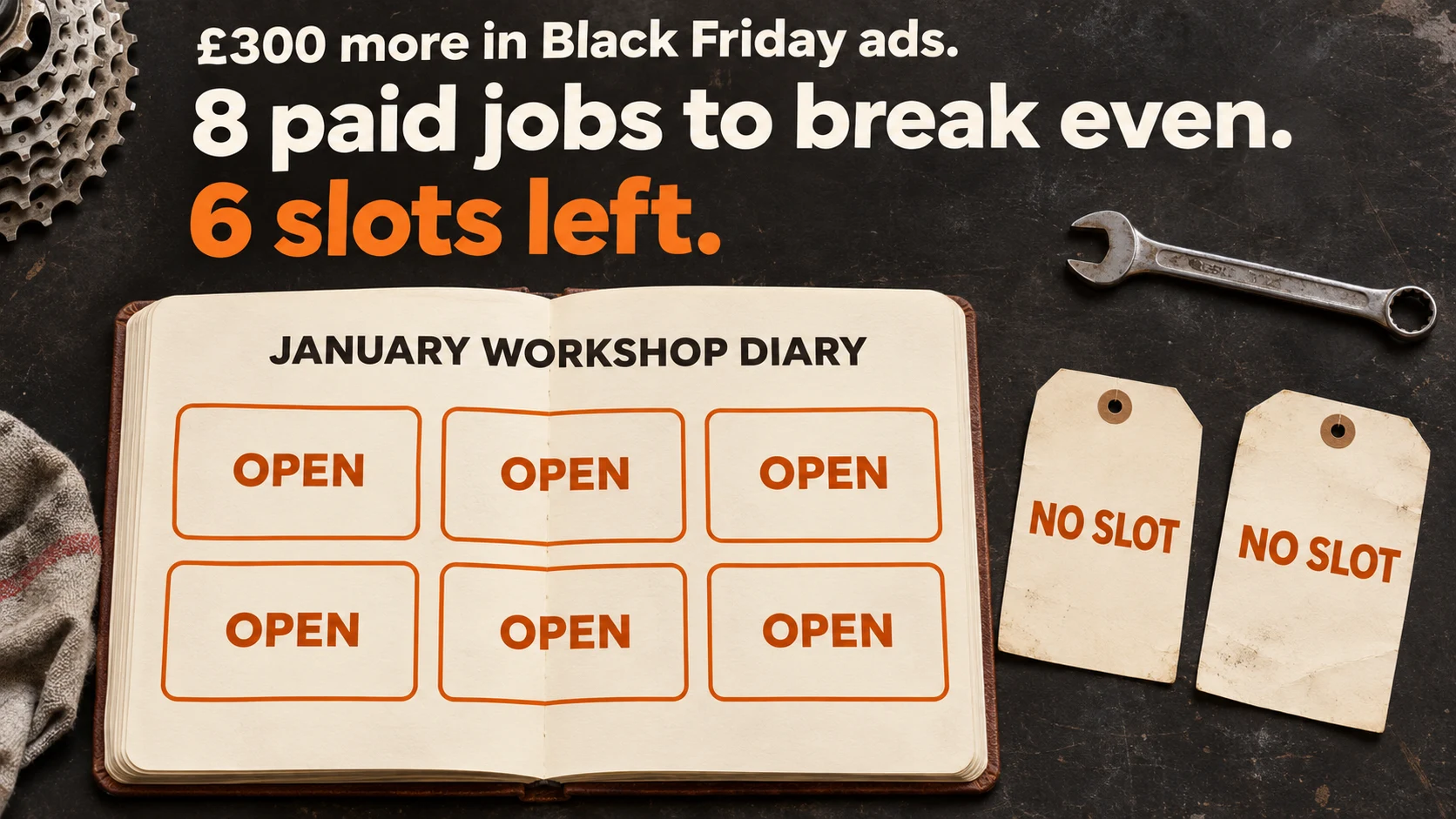
Imagine a Leeds bike workshop weighing up another £300 in Black Friday ads. At £40 left per completed, paid job, it needs eight extra jobs to cover the spend. Its January diary has room for six. Even if the ads fill every spare slot with paid work, the workshop is £60 worse off.
Calculate your Black Friday break-even
The offer is a fixed-price January service with brake and gear adjustments included and replacement parts quoted separately. On the current budget, the workshop expects two of its eight slots to fill. Each completed, paid job leaves £40 after costs that vary with the work, such as labour, consumables and payment fees. The figures exclude VAT.
| The workshop’s numbers | What they mean |
|---|---|
| 8 January slots − 2 expected bookings | Room for 6 extra jobs |
| £300 ÷ £40 = 7.5 | Round up to 8 extra paid jobs to cover the spend |
| 6 × £40 = £240 | Best-case contribution from the extra jobs before ads |
You can use the same two sums to assess your own offer.
- Spare capacity = jobs you can deliver − bookings you expect on the current plan.
- Extra paid jobs you need = additional spend ÷ what you keep per completed, paid job after variable costs. Round up to a whole job.
I’d keep the workshop’s budget where it is. If you realistically expect three extra paid jobs, £120 is the most I’d spend to break even. Allow for cancellations and no-shows when you estimate how many bookings will turn into completed, paid work.
That calculation is for extra ads on the same offer. If you’re also lowering the price, compare the promotion with what you’d expect at the usual price over the same period. Say two customers would have booked at full price and the offer leaves you £10 less on each job. The extra work has to earn back that £20 as well as the extra ad spend.
What to check today
- Start with the diary. Count the jobs you can actually deliver and check who can do the work. If December is full, look for a quiet period you can fill with a clearly priced service.
- Try booking on your phone. Start at the actual ad or email. Check the price, what’s included, any extra charges and which dates you can book. Go as far as confirmation and check who gets the booking.
- Write down what you expect before you spend. Record how many bookings you’d get on the current plan, how many extra paid jobs the spend might bring in and what those jobs would leave after costs.
If you sell products
Here’s a different decision. Is a 20% discount plus £1,000 in extra ads worth more than selling at the usual price over the same period? Say a £100 product leaves £50 per order after variable costs. At £80 it leaves £30, with those costs and overheads unchanged. The figures are illustrative and exclude VAT.
| Measure | At the usual price | With the Black Friday offer |
|---|---|---|
| Orders | 100 expected | 200 |
| Price per order | £100 | £80 |
| Contribution per order | £50 | £30 |
| Contribution before extra ads | £5,000 | £6,000 |
| Additional ad spend | £0 | £1,000 |
| Contribution after extra ads | £5,000 | £5,000 |
That’s (£5,000 you expected to keep + £1,000 in extra ads) ÷ £30 per sale. Two hundred orders gets you back to the £5,000 you expected. You still have to pack the extra hundred.
For your own offer, run the numbers against a realistic range of full-price orders and include what returns usually cost you. Encanta’s performance marketing ROI guide
Black Friday 2026 in the UK
Black Friday is Friday 27 November and Cyber Monday is Monday 30 November. If you advertise a saving, keep the records that back it up. Make the price, terms and end date easy to find, and check that checkout honours the advertised deadline. UK dates · ASA on Black Friday savings claims · CAP guidance on closing dates
What to check after the offer ends
Compare the diary and payment records with the estimate you wrote down before committing the extra spend. Use bookings to check capacity and completed, paid jobs to judge the result. Revisit what those jobs left after costs and ads once the work is delivered and any cancellations, no-shows or refunds are visible.
Check a comparable period afterwards. A customer may have brought forward a booking they would have made at the usual price. Take stock, staffing, seasonality and other campaigns into account before assigning a cause to a busy weekend or a quiet week. Encanta’s enquiry-to-paid-work calculator
Copy this into your Black Friday offer brief
| Write down | Fill in before you change the offer or spend |
|---|---|
| Offer and availability | What can customers book, on which dates, and how many jobs can we deliver? |
| Usual bookings | How many jobs would we expect to complete and get paid for on the current plan? Where does that estimate come from? |
| Contribution per paid job | What does a regular job leave after variable costs? What does the promotional job leave? If you’re lowering the price, how much would you give up on the jobs you would have booked anyway? |
| Spend decision | What extra spend is on the table? How many extra paid jobs would cover it? How many can we realistically add after allowing for cancellations and no-shows? |
| Check afterwards | Who will compare the estimate with paid jobs and costs, and when will those figures be ready? |
Want a second pair of eyes on the numbers?
Before you commit the spend, email hello@encanta.digital with the offer, what you keep per paid job after variable costs, how many slots you have, how many usually fill and the extra budget you’re considering.